













Quick, Easy and Secure: Getting Your Fishing Licence for 'Spree-Athens'
Predator fishing is more popular than ever! In the capital in particular, the number of active anglers has exploded in recent years. Walk along the Spree, the Havel or any of the countless lakes in and around the city today, and you'll find a colourful community where people of all ages, backgrounds and cultures come together. Fishing in Berlin isn't just inclusive — it's a nature experience right in the heart of the urban jungle, relaxation and adventure rolled into one, an after-work event, or simply an original way to discover one of Europe's most exciting cities from a completely different angle.
To fish legally in Germany — and specifically in Berlin — you first need a Fischereischein, colloquially known as an Angelschein, which requires you to pass the fishing exam (Fischereiprüfung). Because fishing law in Germany is regulated at state level, requirements vary between individual federal states.
In this article, we explain how you, as a Berlin resident, can prepare quickly and efficiently for the fishing exam, what costs to expect and what other requirements you need to meet before you can finally start fishing.
Before we focus specifically on the Berlin fishing licence, we want to point out that it can be a convenient option for Berlin residents to sit the fishing exam in Brandenburg instead.

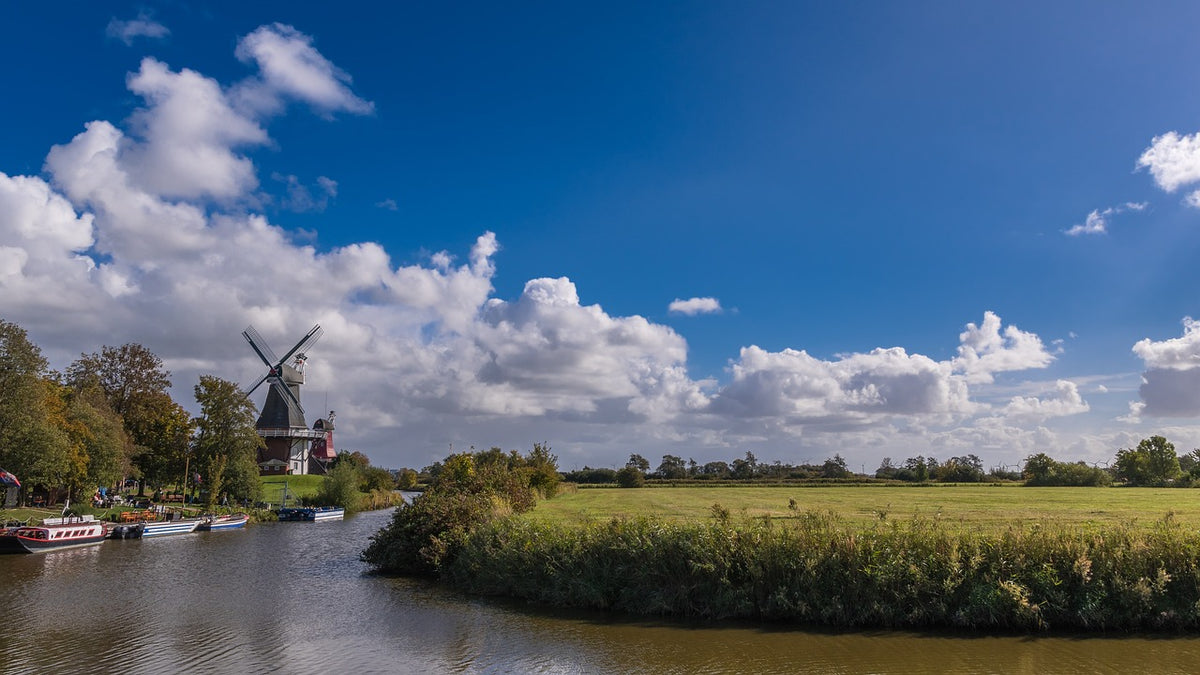
The Havel in Berlin
Alternative: Sitting the Fishing Exam in Brandenburg
Unlike most other federal states, Berlin requires proof of 30 hours of preparatory study before you can sit the fishing exam. You can book a preparatory course through the DAV LV Berlin e.V. or the VDSF LV Berlin-Brandenburg e.V., which is typically spread across several weekends of in-person instruction before you take the exam. In a busy capital city, however, attending courses at fixed times over the weekend simply isn't compatible with everyday life for many people. If you'd rather keep your learning flexible in terms of time and location, there's a convenient alternative.
Because Berlin's fishing law recognises exams taken in other federal states, Berlin residents can simply sit their fishing exam in neighbouring Brandenburg. No preparatory course is mandatory there, so in theory you could study entirely on your own and then turn up for the exam. If you'd rather not bury yourself in textbooks and prefer to learn from professionals using multimedia content, taking an online course with the Anglerschmiede is well worth considering — they also handle exam registration for your preferred date with minimal fuss.
---> Our tip >> Die Anglerschmiede <---

The Fishing Exam in Berlin
Right — now that we've covered that option, let's focus specifically on the Berlin fishing licence. For those who prefer a quick overview, we've summarised the most important questions and information in the table below. The text that follows picks up each point again and covers it in detail.
Table of Contents:
A.) Table with the Most Important Information about the Fishing Licence in Berlin
I.) Fishing in Berlin
a.) Options in the Metropolis
b.) Fishing Licence and Fishing Permit
II.) The Fishing Licence in Berlin
a.) Requirements for the Fishing Exam
b.) Registering for the Fishing Exam
c.) Format and Content of the Fishing Exam
(1) How is the Fishing Exam Structured?
(2) What Exactly is Required in the Theory Exam?
d.) Exam Preparation
(1) What is the Best Way to Prepare?
(2) Online Fishing School: Get Your Licence from the Sofa?
(3) What Do You Learn at (Online) Fishing Schools?
e.) How Do You Receive Your Fishing Licence After Passing the Exam?
III.) Obtaining Fishing Permits
IV.) Fishing Without a Licence — Fines
A.) Table with the Most Important Information about the Fishing Licence in Berlin
| Responsible regional association |
DAV LV Berlin e.V. VDSF LV Berlin-Brandenburg e.V. |
| Are there different types of fishing licence in Berlin? |
Berlin residents can obtain 3 different types of fishing licence: Fischereischein A for anglers, Fischereischein B for commercial fishermen, and a fishing licence for young people between the ages of 12 and 18. |
|
What requirements must be met to take the fishing exam (Fischereischein A)? |
Minimum age: 14 years Residence: primary residence registered in Berlin Exam fee of €25 Proof of 30 hours of preparatory study |
| Is there a junior fishing licence in Berlin? | Yes — young people from the age of 12 up to (but not including) the age of 18 can apply for a junior fishing licence without sitting an exam. However, fishing with this licence is only permitted in the company of a licence holder. |
| Is there a special provision for people with disabilities? | Where fishing serves a therapeutic purpose, a permit can be applied for — analogous to the junior fishing licence — allowing fishing in the company of a licence holder. |
| Is online preparation for the fishing exam permitted in Berlin? |
Through the DAV LV Berlin, this is not possible — you still need to complete 30 hours of in-person preparation. The VDSF LV Berlin-Brandenburg now also offers online preparation, although at present (23.07.23) there are no places available. Alternatively, Berlin residents can also sit their exam in Brandenburg. No preparatory course is mandatory there, but you have the option of completing online preparation and registering for the exam at the same time without any red tape. With the Brandenburg exam certificate, you can have your fishing licence issued in Berlin without any problems. |
| Where do you register for the fishing exam? | Together with the preparatory course, directly with the DAV LV Berlin e.V. or the VDSF LV Berlin-Brandenburg e.V. |
| Where and when does the exam take place? What do you need on the day? | All the relevant details are communicated as part of the preparatory course. On the day of the exam, you must bring valid photo ID and, to be safe, your own ballpoint pen (blue or black ink). |
| How often does the fishing exam take place? |
It's best to enquire about exam dates directly with the DAV LV Berlin e.V. — unfortunately their website is not easy to navigate, so a phone call or email may be more effective: Tel: 030 / 427 17 28 |
| How long is the fishing licence valid in Berlin? | The Berlin fishing licence is issued for either 1 or 5 years. |
| Is it possible to fish in Berlin without a fishing licence? | No. |
| How is the fishing exam in Berlin structured? What are the individual subject areas? |
The fishing exam in Berlin consists exclusively of a theory section and is taken in a multiple-choice format. You are given 60 questions in total, divided into 6 subject areas of 10 questions each, and you have 90 minutes to complete them. To pass, you need to answer at least 45 questions correctly overall and at least 6 questions correctly in each subject area. The 6 subject areas are:
|
| What costs should you expect for the fishing licence in Berlin? |
An in-person preparatory course with the DAV LV Berlin costs €99, plus a €25 exam fee. The initial issue of the fishing licence costs €27 (for 5 years), and you also pay an annual fishing levy of €21. For comparison: a preparatory course for Berlin/Brandenburg with the Anglerschmiede currently costs €119, but this regularly comes with attractive vouchers or lure packages — which, since you're going fishing anyway, means you can claw back a good portion of the cost. |
I.) Fishing in Berlin

Wannsee in Berlin
a.) Options in the Metropolis
Berlin is widely regarded as an inland water paradise, offering anglers — whether targeting non-predatory species or predators — a wealth of spots just waiting to be explored. Whether you prefer somewhere a little away from the bustle on the Havel or Müggelsee, or right in the thick of the city along the Spree, the options are plentiful. The predator stocks in particular draw anglers from well beyond the city limits for a session in the capital.
To fish for perch, zander and company successfully and legally, you need not only the right tackle but also the fishing licence (Fischereischein) AND the fishing permit (Fischereierlaubnisschein) mentioned above.
b.) Fishing Licence and Fishing Permit
Even though the terms sound similar, there is a significant legal difference between the two, which we'll unpack in full here:
- The fishing licence (Fischereischein, colloquially known as the Angelschein) is the basic requirement for fishing in almost every federal state. It is proof of personal competence as prescribed by state law, and is normally linked to passing the fishing exam. In plain terms: the legislation in most federal states requires anyone who wants to fish to first demonstrate in an exam that they have the theoretical and practical ability to fish in accordance with certain standards of conduct.
- The fishing permit (Fischereierlaubnisschein — also referred to as a Fischereilizenz, Fischereierlaubnis, Angelkarte or Gewässerschein) is simply a private-law authorisation to fish on a specific body of water or stretch of water. In other words: the owner or leaseholder of a fishery can grant a third party permission — usually for a fee — to fish their water. This permission does not, however, certify any skill or competence on the part of the permit holder.
For virtually all waters in Germany you need both documents. The exam-based fishing licence is the more fundamental requirement, not least because most permit issuers (owners, leaseholders, tackle shops, platforms such as Fiskado, etc.) ask to see your fishing licence before issuing a permit.
Important legal note!
There is a significant legal distinction between fishing without a fishing licence and fishing without a fishing permit. Fishing without a fishing licence is an administrative offence (Ordnungswidrigkeit) that can be punished in Berlin with a fine of up to €50,000. Fishing on a water without a fishing permit — that is, without the owner's or leaseholder's permission — constitutes the criminal offence of poaching (§293 StGB) and can be punished not only with a fine but with a custodial sentence of up to 2 years.
II.) The Fishing Licence in Berlin
In almost every federal state*, a fishing licence (Angelschein) is required by law to fish. Wherever you want to fish in Germany, without a licence it's virtually impossible. In Berlin, a purely theoretical exam is used to demonstrate that you know your fish, your waters and the relevant fishing laws. To be admitted to this exam, the following requirements must be met.
| *In Lower Saxony this is theoretically not the case, but in practice the holders of fishing rights (owners, leaseholders) only issue fishing permits to holders of a fishing licence. |
a.) Requirements for the Fishing Exam
- Minimum age: The minimum age for the fishing exam is 14 years.
- Residence: Your primary residence must be registered in Berlin.
- Nationality: Nationality is irrelevant — only your place of residence counts. Foreigners who have been living in Germany for less than a year can obtain a fishing licence without sitting an exam, provided they can show that they already acquired the necessary knowledge in their home country.
- Preparatory course: To register for the fishing exam, you must complete a 30-hour preparatory course.
b.) Registering for the Fishing Exam
Where? To sit the fishing exam in Berlin, register with the DAV LV Berlin e.V. or the VDSF LV Berlin-Brandenburg e.V. for the preparatory course and the subsequent exam. The exam fee is €25, which covers costs such as room hire, examiners and materials. Unlike many other federal states, Berlin recognises exams taken in other federal states, even if your primary residence was registered in Berlin at the time of the exam.
When? Information on exam dates can be found directly on the website of the DAV LV Berlin e.V.
c.) Format and Content of the Fishing Exam
Important: You must bring valid photo ID to the exam — either your national identity card or your passport. Also bring a ballpoint pen with blue or black ink.
How is the Fishing Exam Structured?
The Berlin fishing exam is a theory-only test. In a multiple-choice format, you answer 60 questions drawn from 6 different subject areas, and you have 120 minutes to do so.
Exam Content
Much like a driving theory test, there is a fixed question bank containing 600 questions across 6 subject areas:
- General fish biology: primarily questions on body structure, organ function, diseases, etc. in fish, crustaceans and lampreys
- Specific fish biology: primarily questions on the characteristics of individual fish families and species: reproduction, preferred habitat, physiology, etc.
- Water science: primarily questions on types of water and their properties
- Animal protection, nature conservation and environmental protection: primarily questions on endangered species, vegetation in and around the water, the angler's responsibilities and their role as a steward of nature
- Tackle and equipment: primarily questions on the tackle and accessories used in fishing
- Fishing law: primarily questions on the relevant state fishing legislation, protected species found near water, and the rights and obligations of anglers
For the exam, 10 questions are selected from each of the 6 subject areas, giving 60 questions in total. To pass, you need to answer at least 6 questions correctly in each subject area and at least 45 questions correctly overall.
Exam Preparation
How Long Do I Need to Study?
You'll want to set aside some preparation time, but there's no need to panic — the scope of the exam is clearly defined. Giving an exact figure is naturally tricky, but alongside everyday life, work and family, 4–6 weeks is realistic. Nothing to worry about! =)
What is the Best Way to Prepare?
In Berlin, attending a 30-hour preparatory course is compulsory, offered directly by the two responsible regional associations. The DAV LV Berlin e.V. currently offers in-person courses only; the VDSF LV Berlin-Brandenburg e.V. also offers an online option, although registrations are not currently possible (23.07.23).
Online Fishing School: Get Your Licence from the Sofa?
Alternatively, all Berlin residents can register for the fishing exam in neighbouring Brandenburg and optionally complete an online course beforehand. There are now several well-regarded online fishing schools whose digital courses are available at any time and represent a flexible, family-friendly way to prepare for the exam.
What Do You Learn with (Online) Exam Preparation?
In-person courses cover all the topics relevant to the exam, ideally using the same images that appear in the test itself. Course leaders typically work through a textbook in a linear fashion, presenting each section with the help of diagrams, short video clips and so on. As a rule, you complete one or more practice exams before sitting the real thing.
| Pros | Cons |
| - Company while learning | - Linear structure |
| - Direct questions possible | - Fixed times |
| - Travel time and costs | |
| - Constant attention required | |
| - Content occasionally out of date |
Online courses from various providers tend to follow a similar structure. The learning units are self-contained, meaning you can work through them in whatever order suits you. Content is updated regularly, which is quicker and more effective with digital materials than with printed ones — this applies to instructional videos as well. Many online fishing schools also track your individual progress automatically, so you can see at a glance which areas you're already strong in and where there's still room for improvement. Practice exams can be taken more flexibly too, and you can often register for the fishing exam directly through the provider's platform.
| Pros | Cons |
| - Highly flexible preparation | - No direct questions possible |
| - Content updated and tailored to regional requirements | - No company while learning |
| - Pause and repeat content at any time | |
| - No travel time or costs | |
| - Automatically generated progress statistics |
Some might argue that in-person courses make it easier to prepare for the practical elements. For the Berlin and Brandenburg exams, that point doesn't apply — unlike in some other federal states, there is no practical component here. That said, most online fishing schools now offer digital tackle-assembly tests and highly detailed instructional videos that leave no question unanswered. You just need a certain amount of discipline to actually practise the rigs and knots you've watched in your own living room — or wherever you happen to be studying.
How Do You Receive Your Fishing Licence After Passing the Exam?
With thorough preparation, the exam shouldn't pose any problems. Once you've passed, you'll receive your exam certificate, which you take to the Fischereiamt Berlin to have your fishing licence issued. In addition to the certificate, you'll need a valid photo ID (national identity card or passport) and a passport photograph. A fee applies depending on the validity period you choose: €18 for a one-year licence or €27 for five years. You also pay an annual fishing levy of €21.

The Spree in Berlin at Night
Obtaining Fishing Permits
To make your first cast, you'll also need a fishing permit for the specific water where you want to fish.
Here you'll find the publications of the State of Berlin on fishing regulations.
Fishing Without a Licence: Fines
As mentioned above, fishing without private-law authorisation — that is, without a fishing permit — is classified as a criminal offence (§ 293 StGB Wilderei) and can be punished not only with a fine but with a custodial sentence of up to 2 years.
There are also other violations that, while not criminal offences, nonetheless constitute regulatory infringements (Ordnungswidrigkeiten) and can be punished with fines of up to €5,000. Fishing tackle in your possession at the time of the offence may be confiscated.
Extract from the Berlin State Fishing Act:
§ 43 LFischG – Regulatory Offences
(1) Anyone who intentionally or negligently commits the following acts is guilty of a regulatory offence:
(2) The regulatory offence may be punished with a fine of up to €50,000.